Suggestions
Journal Information

Most often read

26886
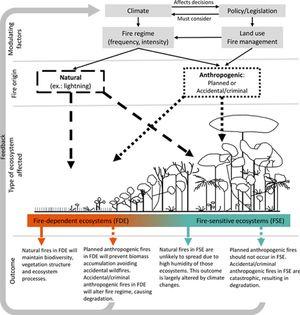
Understanding Brazil’s catastrophic fires: Causes, consequences and policy needed to prevent future tragedies
Vânia R. Pivello, Ima Vieira, Alexander V. Christianini, Danilo Bandini Ribeiro, Luciana da Silva Menezes, Christian Niel Berlinck, Felipe P.L. Melo, José Antonio Marengo, ... Gerhard E. Overbeck
Perspectives in Ecology and Conservation. 2021;19:233-55
26886
Highlights

  • Fire incidence in Brazil increased in 2019−2020, with unprecedented magnitude in the Pantanal.

  • Fire effects vary according to the evolutionary history of the affected ecosystem.

  • A drier climate and land use changes increase the risk of wildfires throughout Brazil.

  • Poor governance further exacerbates the risk and damage of wildfires.

  • Fire policies must be improved by collaboration among different sectors of the society.

Open access
26170
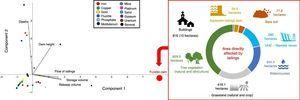
Fundão tailings dam failures: the environment tragedy of the largest technological disaster of Brazilian mining in global context
Flávio Fonseca do Carmo, Luciana Hiromi Yoshino Kamino, Rogério Tobias Junior, Iara Christina de Campos, Felipe Fonseca do Carmo, Guilherme Silvino, Kenedy Junio da Silva Xavier de Castro, Mateus Leite Mauro, ... Carlos Eduardo Ferreira Pinto
Perspectives in Ecology and Conservation. 2017;15:145-51
26170
Highlights

  • The collapse of the Fundão dam was the major environmental disaster of the world mining industry.

  • We identify with high resolution satellite images the ecosystems and cultural heritage damage.

  • Contrary to post-disaster expectations, there was a setback in environmental legal planning.

Open access
18916
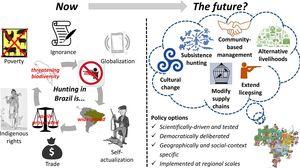
Hunting in Brazil: What are the options?
Chiara Bragagnolo, Gabriela M. Gama, Felipe A.S. Vieira, João Vitor Campos-Silva, Enrico Bernard, Ana C.M. Malhado, Ricardo A. Correia, Paul Jepson, ... Richard J. Ladle
Perspectives in Ecology and Conservation. 2019;17:71-9
18916
Highlights

  • Hunting is banned in Brazil.

  • Illegal hunting in Brazil is widespread and cultural embedded.

  • Data about wildlife, habitat distribution and motivations for hunting are lacking.

  • Main factors driving non-compliance are analyzed and discussed.

  • Policy options to deal with hunting in the future are proposed.

Open access
17650
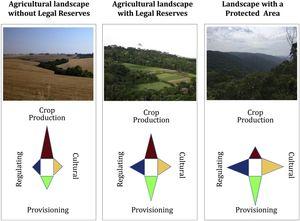
Why Brazil needs its Legal Reserves
Jean Paul Metzger, Mercedes M.C. Bustamante, Joice Ferreira, Geraldo Wilson Fernandes, Felipe Librán-Embid, Valério D. Pillar, Paula R. Prist, Ricardo Ribeiro Rodrigues, ... 407 scientist signatories (including 391 PhD researchers from 79 Brazilian research institutions)
Perspectives in Ecology and Conservation. 2019;17:91-103
17650
Highlights

  • Legal Reserves represent almost one third of all remaining native vegetation in Brazil.

  • There is no solid argument, evidence or theory that support that Legal Reserve extinction will favor Brazil development.

  • The extinction of Legal Reserves will lead to a huge increase in native vegetation loss, with blatant negative consequences on biodiversity and ecosystem services provision.

  • Legal Reserves are a key-component for effective and less expensive nature-based solutions.

  • Legal Reserves should be considered as assets for the development of Brazil rather than liabilities.

Open access
17217
The South Brazilian grasslands – A South American tallgrass prairie? Parallels and implications of fire dependency
G.E. Overbeck, J.D. Scasta, F.F. Furquim, I.I. Boldrini, J.R. Weir
Perspectives in Ecology and Conservation. 2018;16:24-30
17217
Highlights

  • South Brazilian and North American tallgrass grasslands show botanical similarity.

  • Fire appears to have a similar ecological role in both regions.

  • Fire as ecological process and conservation tool is undervalued in Brazil.

  • Brazilian grassland conservation might benefit from North American experiences.

  • Comparative ecological studies will improve our understanding of grassland ecology.

Open access
15065
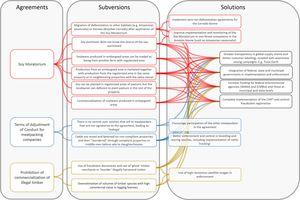
Deforestation control in the Brazilian Amazon: A conservation struggle being lost as agreements and regulations are subverted and bypassed
William D. Carvalho, Karen Mustin, Renato R. Hilário, Ivan M. Vasconcelos, Vivianne Eilers, Philip M. Fearnside
Perspectives in Ecology and Conservation. 2019;17:122-30
15065
Highlights

  • Brazil's regulations governing deforestation and logging are often circumvented.

  • Agreements with soy and beef companies are important but need strengthening.

  • Effectiveness of commodity agreements is diminished by laundering and leakage.

  • Timber harvest and transportation permits are open to widespread fraud.

  • Ways exist to reduce circumvention of commodity agreements and regulations.

Open access
14769
Sustainability of Jaborandi in the eastern Brazilian Amazon
Cecilio Frois Caldeira, Tereza Cristina Giannini, Silvio Junio Ramos, Santelmo Vasconcelos, Simone Kuster Mitre, Jakeline Prata de Assis Pires, Gracialda Costa Ferreira, Selma Ohashi, ... Antonio Eduardo Furtini Neto
Perspectives in Ecology and Conservation. 2017;15:161-71
14769
Highlights

  • Pilocarpus microphyllus is the main source of the medicament for glaucoma treatment.

  • Absence of sustainable management increases the risk of extinction of the species.

  • We review our understanding of P. microphyllus and propose conservation strategies.

  • New potential areas of natural occurrence of P. microphyllus are proposed.

  • Well synchronized vegetative and reproductive patterns in field growing plants.

Open access
14350
Free, prior and informed consent: how to rectify the devastating consequences of harmful mining for indigenous peoples’
Angus MacInnes, Marcus Colchester, Andrew Whitmore
Perspectives in Ecology and Conservation. 2017;15:152-60
14350
Highlights

  • Chronology of extractive industry and multi-stakeholder initiatives in indigenous peoples’ territories.

  • Focus on corporate responsibility to respect indigenous peoples’ right to give or withhold consent.

  • Case studies involving ICMM member companies and the application of FPIC standard.

  • Implementation of FPIC standard fundamental in altering predominant devastating model of mining.

  • Indigenous peoples’ right to FPIC is the desired standard to protect indigenous rights.

Open access
13997
Assessing the risk of invasion of species in the pet trade in Brazil
Clarissa Alves da Rosa, Rafael Zenni, Sílvia R. Ziller, Nelson de Almeida Curi, Marcelo Passamani
Perspectives in Ecology and Conservation. 2018;16:38-42
13997
Highlights

  • Six mammal pet species were assessed, all resulting in very high risk of invasion.

  • Rodents resulted the highest risk level among our analyses.

  • Reproductive traits account for the major part of the high risk of evaluated species.

  • Food group and ecological interactions were the main traits increasing risk scores of carnivores.

Open access
13435
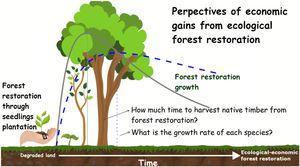
Potential native timber production in tropical forest restoration plantations
Pedro Medrado Krainovic, Angélica Faria de Resende, Nino Tavares Amazonas, Catherine Torres de Almeida, Danilo Roberti Alves de Almeida, Carina Camargo Silva, Henrique Sverzut Freire de Andrade, Ricardo Ribeiro Rodrigues, Pedro Henrique Santin Brancalion
Perspectives in Ecology and Conservation. 2023;21:294-301
13435
Highlights

  • Most native species produced stems of reasonable quality in restoration plantations.

  • Tree growth limited the potential for timber production in ecological restoration.

  • Silviculture operations and improvement are crucial for producing native timber.

  • Logging based on growth optimized the timber production vs time relation.

  • Species-specific growth models can maximize timber production and guide harvesting.

Full text access
13281
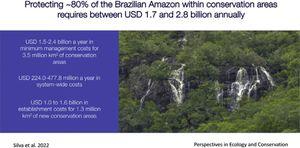
Minimum costs to conserve 80% of the Brazilian Amazon
José Maria Cardoso da Silva, Luís Claudio Fernandes Barbosa, Julie Topf, Ima Célia G. Vieira, Fabio R. Scarano
Perspectives in Ecology and Conservation. 2022;20:216-22
13281
Highlights

  • Conserving ∼80% of the Brazilian Amazon is still feasible

  • Conservation areas are essential for a new regional development model

  • The cost of establishing.1.3 million km2 of new conservation areas is USD 1.0–1.6 billion

  • The annual cost of 3.5 million km2 of conservation areas is USD 1.7–2.8 billion

  • A new ambitious, decentralized, and agile fund mechanism is required

Open access
12884
Rewilding South America: Ten key questions
Meredith Root-Bernstein, Mauro Galetti, Richard J. Ladle
Perspectives in Ecology and Conservation. 2017;15:271-81
12884
Highlights

  • Rewilding is more than species (re-)introductions.

  • Rewilding also produces ecological restoration and social impacts.

  • South American projects can develop contextually appropriate rewilding approaches.

  • There are many opportunities to study and implement rewilding in South America.

Open access
12787
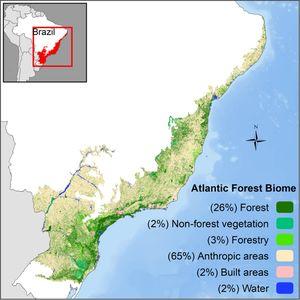
From hotspot to hopespot: An opportunity for the Brazilian Atlantic Forest
C.L. Rezende, F.R. Scarano, E.D. Assad, C.A. Joly, J.P. Metzger, B.B.N. Strassburg, M. Tabarelli, G.A. Fonseca, R.A. Mittermeier
Perspectives in Ecology and Conservation. 2018;16:208-14
12787
Highlights

  • High-resolution remote sensing data reveals 28%, or 32 million hectares (Mha), of native vegetation cover in the Brazilian Atlantic Forest.

  • There are 7.2Mha of degraded riparian areas, of which 5.2Mha at least must be restored before 2038 by landowners for legislation compliance.

  • Restoring this existing legal debt could increase native vegetation cover in the biome up to 35%.

Open access
12614
Dismantling Brazil's science threatens global biodiversity heritage
G. Wilson Fernandes, Mariana M. Vale, Gerhard E. Overbeck, Mercedes M.C. Bustamante, Carlos E.V. Grelle, Helena Godoy Bergallo, William E. Magnusson, Alberto Akama, ... Valério D. Pillar
Perspectives in Ecology and Conservation. 2017;15:239-43
12614
Highlights

  • Robust information on biodiversity patterns and trends is important for public policies for nature conservation and sustainable development.

  • Current Brazilian policy of cuts in science puts research programs and long term monitoring of biodiversity at risk.

  • Reduced spending will have long-term negative impacts on capacity building in science and technology.

  • Cuts will reduce Brazil's capability to predict, mitigate negative impacts of, and adapt to global environmental changes.

  • Cuts will result in less effective and efficient conservation strategies, threatening ecosystem services and human well-being, and in failure to reach the National Targets for Biodiversity 2011–2020.

Open access
12417
Management of cats and rodents on inhabited islands: An overview and case study of Fernando de Noronha, Brazil
James C. Russell, Carlos R. Abrahão, Jean C.R. Silva, Ricardo A. Dias
Perspectives in Ecology and Conservation. 2018;16:193-200
12417
Highlights

  • Cats & rodents are widely introduced and damaging mammals on islands around the world.

  • Eradication is possible on uninhabited small to medium but not inhabited large islands.

  • Management on inhabited islands focuses on agriculture, livelihoods and animal welfare.

  • Reticence to management leads to conservation inaction & ultimately biodiversity loss.

  • Fernando de Noronha shows the conflict in cat and rodent management on inhabited islands.

Open access
12140
Airport noise and wildlife conservation: What are we missing?
Renata D. Alquezar, Regina H. Macedo
Perspectives in Ecology and Conservation. 2019;17:163-71
12140
Highlights

  • Airport-produced noise is unsuitable for areas of wildlife protection.

  • Noise can generate stress and jeopardize wildlife reproduction.

  • There is a need in Brazil to implement noise regulation within areas of wildlife protection.

Open access
12002
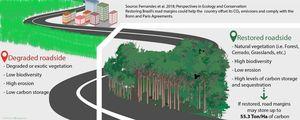
Restoring Brazil's road margins could help the country offset its CO2 emissions and comply with the Bonn and Paris Agreements
G.W. Fernandes, A. Banhos, N.P.U. Barbosa, M. Barbosa, H.G. Bergallo, C.G. Loureiro, G.E. Overbeck, R. Solar, ... M.M. Vale
Perspectives in Ecology and Conservation. 2018;16:105-12
12002
Highlights

  • The restoration of usually degraded roadsides is proposed.

  • Thousands of hectares are readily available for restoration in Brazil.

  • This corresponds to US$ 26.5 billion in the carbon market.

  • The restoration of these wasted public lands can stimulate ecological restoration.

Open access
11970
Introducing digital cameras to monitor plant phenology in the tropics: applications for conservation
Bruna Alberton, Ricardo da S. Torres, Leonardo F. Cancian, Bruno D. Borges, Jurandy Almeida, Greice C. Mariano, Jefersson dos Santos, Leonor Patricia Cerdeira Morellato
Perspectives in Ecology and Conservation. 2017;15:82-90
11970
Highlights

  • Leaf phenology monitoring using digital cameras in tropical vegetation.

  • Digital images can track temporal changes in the vegetation structure.

  • Phenocams are potential tools for conservation biology.

  • Phenocams for tropical phenology monitoring are a promising research field in Brazil.

Open access
11780
Ecosystems as infrastructure
José Maria Cardoso da Silva, Emily Wheeler
Perspectives in Ecology and Conservation. 2017;15:32-5
11780
Highlights

  • The concept of ecosystems as infrastructure is reviewed.

  • The terms green, ecological, natural, and blue have been used in the literature.

  • Green infrastructure is the most commonly used name.

  • A more inclusive concept for green infrastructure is proposed.

  • Design principles for green infrastructure at all spatial scales are suggested.

Open access
11531
To graze or not to graze: A core question for conservation and sustainable use of grassy ecosystems in Brazil
Rodrigo Baggio, Gerhard E. Overbeck, Giselda Durigan, Valério D. Pillar
Perspectives in Ecology and Conservation. 2021;19:256-66
11531
Highlights

  • Grassy ecosystems in South America have developed under grazing by large herbivores until the Early Holocene.

  • The grassy biomes need grazing animals and/or fire to maintain their biodiversity and ecological characteristics.

  • Grazing in the Legal Reserve can represent a social process with benefits for land users and biodiversity conservation.

  • Knowledge on grazing in Brazil’s grassy ecosystems should be developed by researchers and stakeholders.

Open access
Perspectives in Ecology and Conservation